
Shapes
Individual exhibition
BWA [Art Exhibition Office]
Sandomierz, Poland
12 February - 6 March 2016
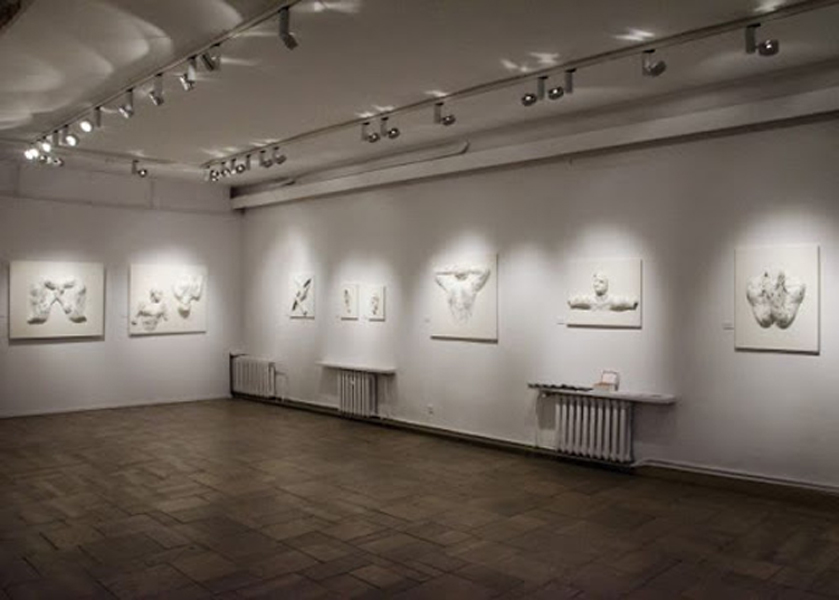
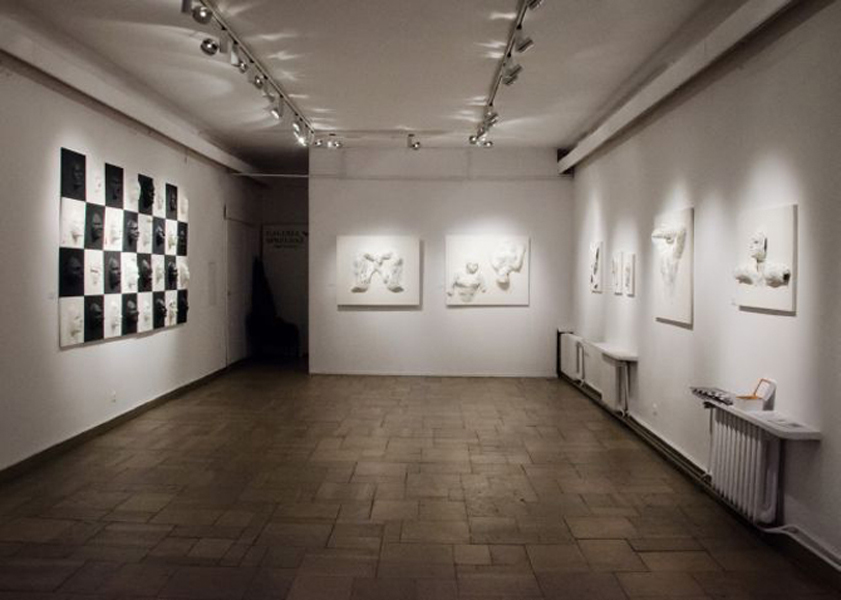
Sculpture is most likely the oldest of the visual arts, and the earliest representation of the human figure is that of a woman – a symbol of fertility. Cult figurines known as "Venuses," discovered in Austria, Germany, Moravia, and Ukraine, date back to the Paleolithic era, with some estimated to be as old as 400,000 years (such as the Venus of Tan-Tan in Morocco or the Venus of Berekhat Ram in the Golan Heights). Sculpture imitates nothing and hides nothing. Although it often serves as an illustration of another reality, it is a work that can be touched; thanks to its three-dimensionality, it can be viewed from every side, and due to the material used – most often stone – it conveys a sense of immortality.  Shapes – as forms bounded by multiple planes – surround us everywhere and create our reality. The shape closest to a human being is themselves. In the hands of an artist, the human form becomes a personification of concepts and ideas – such as good, evil, love, or freedom – seen in works like the "Dying Gaul" from the 3rd century BC or E. Delacroix’s "Liberty Leading the People." We can consider the concept of shape in the context of both Matter and Spirit. Gaya Lastovjak, by creating sculptures on canvas, gives concrete shapes – such as a torso, a hand, or a foot – to the spiritual aspects of concepts and feelings. She points to a certain multi-layered nature of meanings through the direct presentation of hidden signs and content. In doing so, she opens up the possibility for us to interpret and search for the essence of things beyond the layer of matter itself. The author refers to the human being and their place in the world, in society, in the environment to which they belong, and in the family. Her "Game" – a composition also known as "Chessboard" – is an expression of the author's observations on the role of the individual who has been objectified and forced into the frames of games and conventions, exploiting their fears, feelings, and weaknesses. However, the author also points out that we often enter into various dependencies ourselves, wearing masks intended to protect us from the outside world – or, perversely, we attempt to deceive others ourselves. Gaya Lastovjak's metaphorical compositions, such as "Escape," "Crossroads," or "Polish shoes," tell stories of ordinary people and ordinary life, where there is room for love and faith in another human being, despite their imperfections and frailties. Particular attention is drawn to perhaps the most modest piece in the exhibition, an intimate composition depicting footprints – "Self-portrait." It is an extraordinary work that does not leave the viewer indifferent and lingers in the memory, provoking with its message: that the trace we leave behind is what truly matters, not how we look or what stage of life we are at.
Written by Katarzyna Pisarczyk
Full publication [click here]

Kształty
Wystawa indywidualna
BWA [Biuro Wystaw Artystycznych]
Sandomierz
12 lutego - 6 marca 2016
 Rzeźba jest najprawdopodobniej najstarszą ze sztuk plastycznych, a najstarszym przedstawieniem postaci ludzkiej jest postać kobiety – symbolu płodności. Kultowe figurki zwane "Venus", odnajdywane w Austrii, Niemczech, na Morawach i Ukrainie pochodzą z epoki paleolitu i datuje się je nawet na 400 000 tys. lat (Maroko – Venus z Tan-Tan, Wzgórza Golan – Venus z Berekhat Ram). Rzeźba niczego nie imituje, nie ukrywa i chociaż często jest ilustracją innej rzeczywistości jest dziełem, które można dotknąć, dzięki trójwymiarowości można ją obejrzeć z każdej strony, a z racji użytego materiału – najczęściej kamienia – daje poczucie nieśmiertelności. Kształty – jako formy ograniczone wieloma płaszczyznami – otaczają nas zewsząd i tworzą naszą rzeczywistość. Najbliższym człowiekowi kształtem jest on sam. W rękach artysty staje się personifikacją pojęć i idei – dobra, zła, miłości, wolności, jak np. "Umierający Gal" z III w. p.n.e. czy "Wolność wiodąca lud na barykady" E. Delacroix. Pojęcie kształtu możemy rozpatrywać w kontekście tak Materii jak i Ducha. Gaya Lastovjak tworząc rzeźby na płótnie, nadaje duchowym aspektom pojęć i uczuć konkretne kształty: torsu, dłoni, stopy. Wskazuje na pewnego rodzaju wielopłaszczyznowość znaczeń poprzez bezpośrednie przedstawienie ukrytych znaków i treści. Otwiera tym samym przed nami możliwość interpretacji i poszukiwania istoty rzeczy poza warstwą samej materii. Autorka odnosi się do człowieka i jego miejsca w świecie, w społeczności, w środowisku do którego przynależy, w rodzinie. Jej "Gra" – kompozycja znana również jako "Szachownica" – jest wyrazem spostrzeżeń Autorki co do roli człowieka, którego uprzedmiotowiono i wciśnięto w ramy gier i konwenansów, wykorzystując jego lęki, uczucia i słabości. Ale Autorka zwraca również uwagę na to, że sami często wchodzimy w różne zależności, przywdziewamy maski, które mają ochronić nas przed światem zewnętrznym – albo przewrotnie – sami próbujemy omamić drugiego człowieka. Metaforyczne kompozycje Gayi Lastovjak, jak choćby "Ucieczka", "Rozdroże" czy "Polish shoes", opowiadają o zwyczajnych ludziach i zwyczajnym życiu, w którym jest miejsce na miłość i wiarę w drugiego człowieka, pomimo jego ułomności i słabości. Szczególną uwagę zwraca bodajże najskromniejsza na wystawie, kameralna kompozycja przedstawiająca odcisk stóp – "Autoportret". Praca niezwykła, która nie pozostawia obojętnym i długo pozostaje w pamięci, drażni swoim przesłaniem, mówiącym że ważny jest ślad jaki po sobie zostawimy, a nie to jak wyglądamy i na jakim etapie życia jesteśmy.
Autorka Katarzyna Pisarczyk
Cała publikacja [kliknąć tutaj]

Gaya Lastovjak
The art of emotions trapped in white
Copyright © 2026 GAYA LASTOVJAK